
As Spring is displaying her beautiful colours in an amazing array of plants and spring flowers, many Municipalities are embracing a “pause in mowing” or a no-mow season.
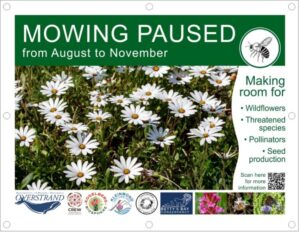 Through the proactive engagement of the Kleinmond Nature Conservation Society with the Overstrand Municipality (OM), the OM has agreed to a “pause in mowing” from August to November for selected areas in Kleinmond, Betty’s Bay and Pringle Bay. A signboard will demarcate these areas. The BBC is sponsoring 30 of these signboards for the areas in Betty’s Bay. If anyone would like to sponsor a sign for Betty’s Bay at R162, please contact bettysbayconservancy@gmail.com.
There is another type of “flower” often seen on our roadsides, open spaces and beaches. It is widespread, comes in many varieties and colours but it is not pretty. Litter! Thanks to those who helped clean up Porter Drive in August.
PORTER DRIVE CLEANUP: 19 AUGUST
A heartfelt thank you to everyone who supported the Porter Drive clean-up, held from 16:00 to 18:00. We had a fantastic turnout. About 20 residents rolled up their sleeves and helped clear a large amount of waste, from building rubble and car parts to plastic in all shapes and sizes, cigarette butts, tins, bottles, and even old voting signs.
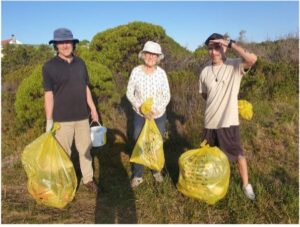
The weather played along beautifully and the energy was nothing short of uplifting. Huge thanks to Barbara Jenman for your generous support and providing the yellow bags and rubbish grabbers and to Wayne Jackson for kitting us out with luminous vests that kept us safe and visible.
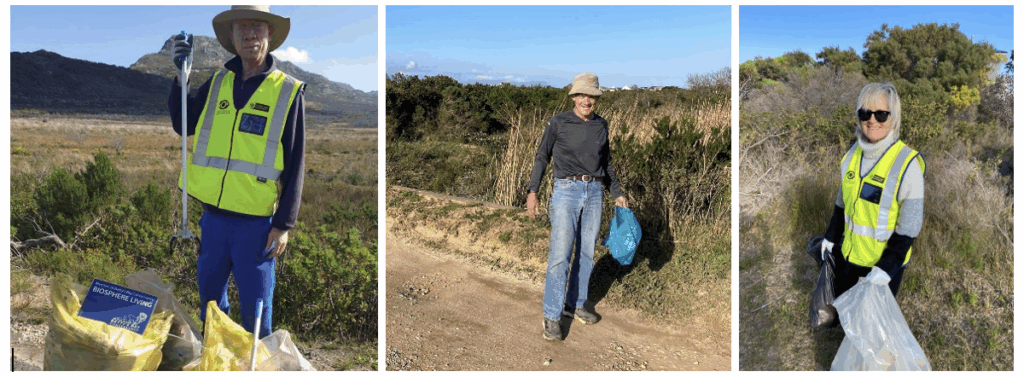
Apologies for not capturing photos of everyone who joined in, we appreciated all the support.
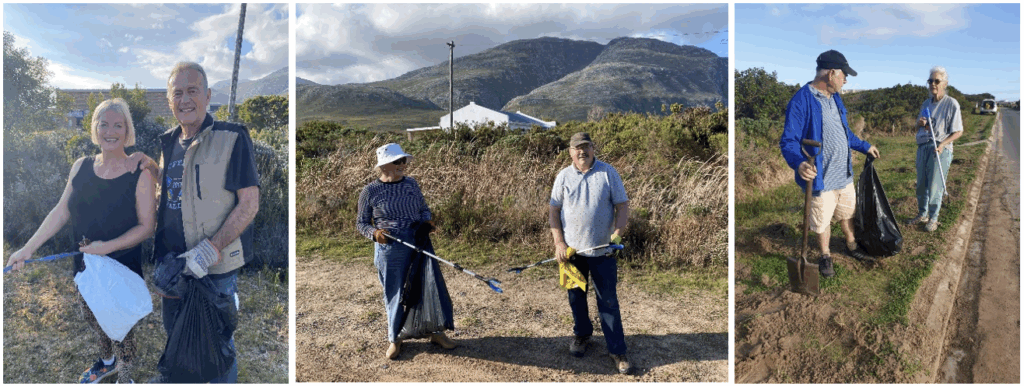
Let us keep the momentum going. See you at the next one!
Patrick Bolttler
BBC4thSATURDAYon 23rd AUGUST : (RE)WILDING YOUR GARDEN
A big thanks and congratulations to Johan Steyn for his inspiring presentation on (Re)wilding your garden. Johan is our most recent BBC Team member, voted in at our 2025 BBC AGM in July.
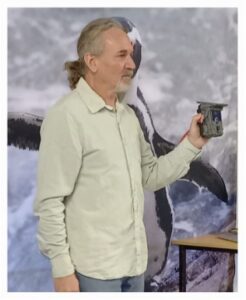 He shared with us how he had purchased the erf in front of his house, and transformed it over the years into a safe natural environment in which wildlife can forage and shelter.
He removed the alien vegetation and gradually planted about 130 milkwood trees and other indigenous plants. The plants are natural food for the wildlife and he provides water sources on his property.
The photographs and video footage of the wildlife visitors and residents, during the day and at night, in this environment were beautiful and amazing.
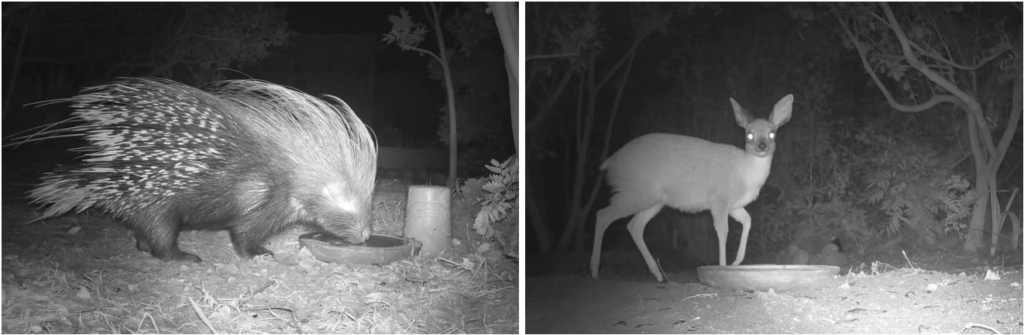
A “camera” trap is a great way to see who comes to visit at night. The top picture shows Johan holding the camera he uses.
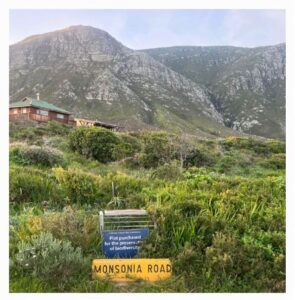 Although most people do not have a “Plot purchased for the preservation of biodiversity”, there are many simple acts that we can do in our gardens to “rewild” them if they are currently predominantly lawn or hardened paved surfaces.
Even if we can all transform some sections of our gardens, this all helps to regain areas for wildlife.
Do small sections at a time so it does not seem like an overwhelming task.
A few tips:
- Remove the alien invasive vegetation
- Plant indigenous vegetation
- Plant vegetation that provides a food source for buck, porcupine, birds etc.
- Lawn provides no shelter for wildlife and very limited food
- Open up narrow pathways for the wildlife to move around the garden
- Provide water sources e.g. bowls of water
- Provide some shallow water sources with e.g. with stones in it for bees
- Build a pond
- Keep Cape galaxias fish in your pond – small freshwater fish
- Turn your outside lights off at night – use motions sensors if needed.
- Fences obstruct wildlife movement, especially animals like tortoises
- If you need to fence for pets, considers fencing only a portion of your erf
- Invest in a “camera trap” (see the picture) to be able to see your wildlife visitors
Johan’s videos and photographs from his camera were a reminder of how wildlife used to have the space to roam freely and safely here. Development has destroyed so much of the fynbos, limiting the wildlife to remaining spaces. Often these spaces are scattered “pockets”. We need safe wildlife corridors to connect these pockets.
Your garden can contribute to these safe spaces and wildlife corridors.
For “new builders”, please do not strip your plot barren! The guideline is that you just clear the footprint for your new home, and leave the rest of the fynbos on the erf.
Be inspired by Johan’s initiative and see how you can transform or reclaim a portion of your garden into safe wildlife space.
BE INSPIRED!
Some people have already put that inspiration into action!
“Ten healthy looking Milkwood trees from Walker Bay Nursery in Hermanus are now planted in our garden in Stony Point”. Patrick
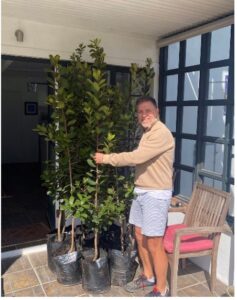
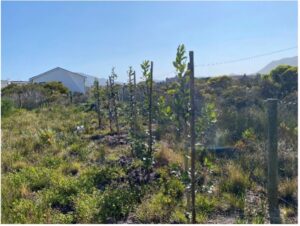
Leon and the 10 Milkwoods
Did Johan’s talk inspire you too? Please let us know if you have “rewilded your garden” in some way since then and we can feature it in a future BBC newsletter.
UPDATE on the BETTY’S BOOK
Don’t miss out on this book – it contains so many fascinating articles about Betty’s Bay.
If you would like to order a copy in advance of the proposed 20 December launch, please contact Skip Krige on 📧 skipkrig@mweb.co.za and 📞 082 411 3414
You can also contact Skip if you or your company would like to support this remarkable project by making a donation towards the cost of producing the book.