
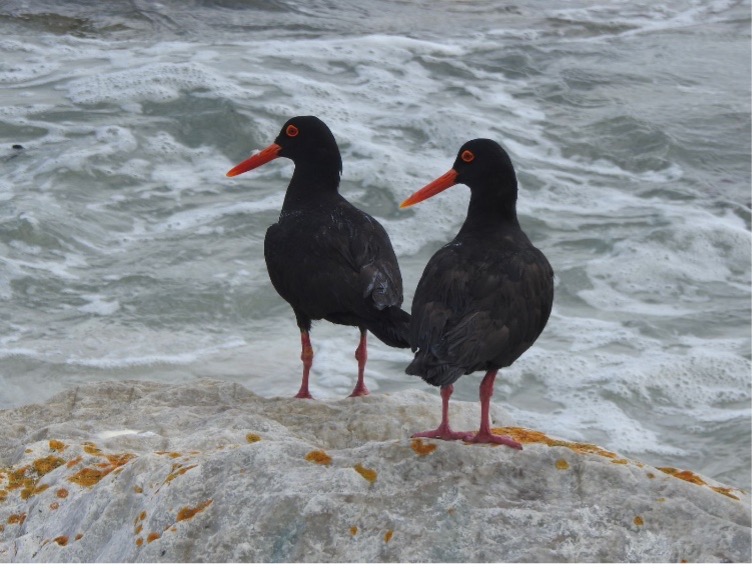
 Our Oystercatchers have finished breeding for the season and we would like to share some interesting statistics.
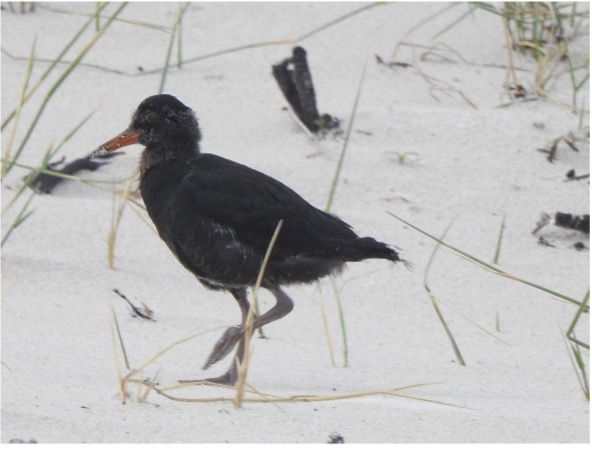
We monitored the stretch of coastline from Main Beach, including Malkopsvlei (Bass River) outflow, Dawidskraal and the Bird sanctuary to the Disa River outflow below Harold Porter. Our results were as follows:
- We had 11 breeding pairs, with 22 attempts to breed (7 pairs had second attempts, and 4 pairs had a third attempt). We lost a total of 37 eggs and only 4 eggs hatched. We lost 2 chicks and only 2 chicks have survived.
- Our chick on Main beach has fledged (4 months old). One chick at Bass River is now close to 6 weeks’ old and is ready to fledge.
- One chick at Bass River outflow disappeared after only a few days. The other chick on Main Beach area disappeared after four weeks.
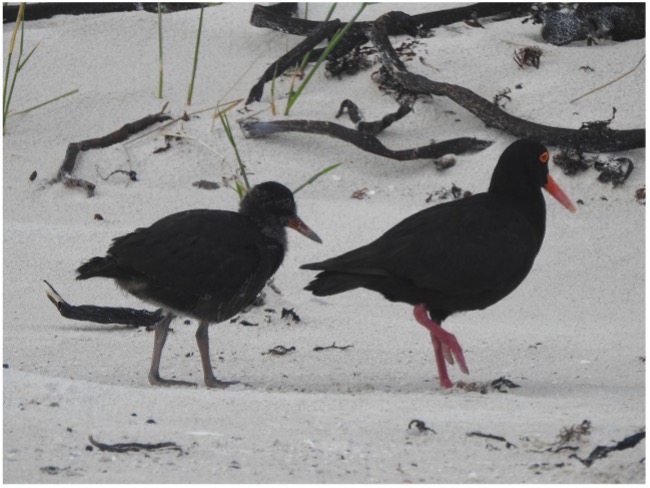
From the above it is evident that we have had a poor season. Unfortunately, many eggs were washed away due our rough seas and high tides. We also have no evidence as to what predation may have taken place. Without camera traps it is difficult to assess whether the poor results are due to natural predation – by otters, mongoose, kelp gulls or ravens – or human disturbance. Unfortunately, breeding season coincides with the heavy human activity during the peak holiday season.
Results from the other stretches of our coastline are equally poor.
- In Jocks Bay area: only 1 egg hatched but the chick did not survive.
- From Main beach to Stony Point: 4 eggs hatched but only 1 chick has survived and fledged.
From 66 eggs laid in total in the areas under discussion, we only have 3 surviving chicks!
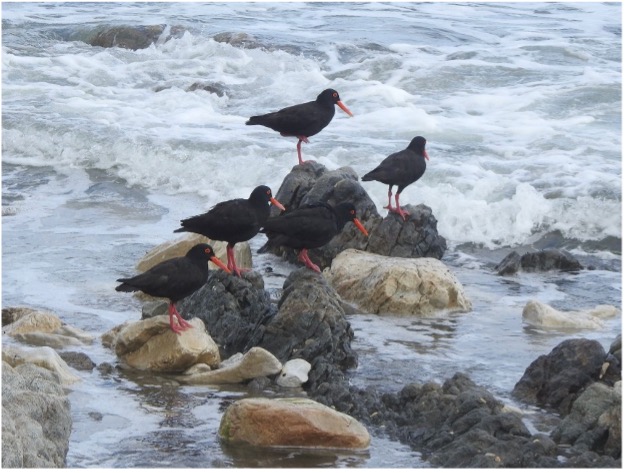
Even though the African Oystercatcher (Haematopus moquini) holds a Least Concern status on the IUCN list, findings suggest that the species needs to be monitored as a potential concern in our region. They remain at risk from human activity, coastal development and climate change.
Finally, thank you to our monitors Colin and Myrna Cook, Wendy and Mark Lucas and Sue and Neil Brown for your efforts and concern in trying to protect and save our Oystercatchers.
A special thank you to Carin Malan for her interest and concern and to Birdlife Overstrand for supplying our warning signs.
To all those who have adhered to the signs and kept your dogs leashed, especially when approaching the nesting areas, a huge thank you.
Lenore and Duncan Watermeyer
Thanks from the BBC to all the Oystercatcher monitors. We know you spend long hours on the beach to keep track of each pair, their eggs and chicks. These statistics are not a reflection of a lack of care and monitoring on your behalf, nor of the dedication of parents in caring for their eggs and chicks. Van As and Jacque Jordaan depicted this dedication so well in their movie of the Oystercatcher.