
YOUR WETLAND GARDEN
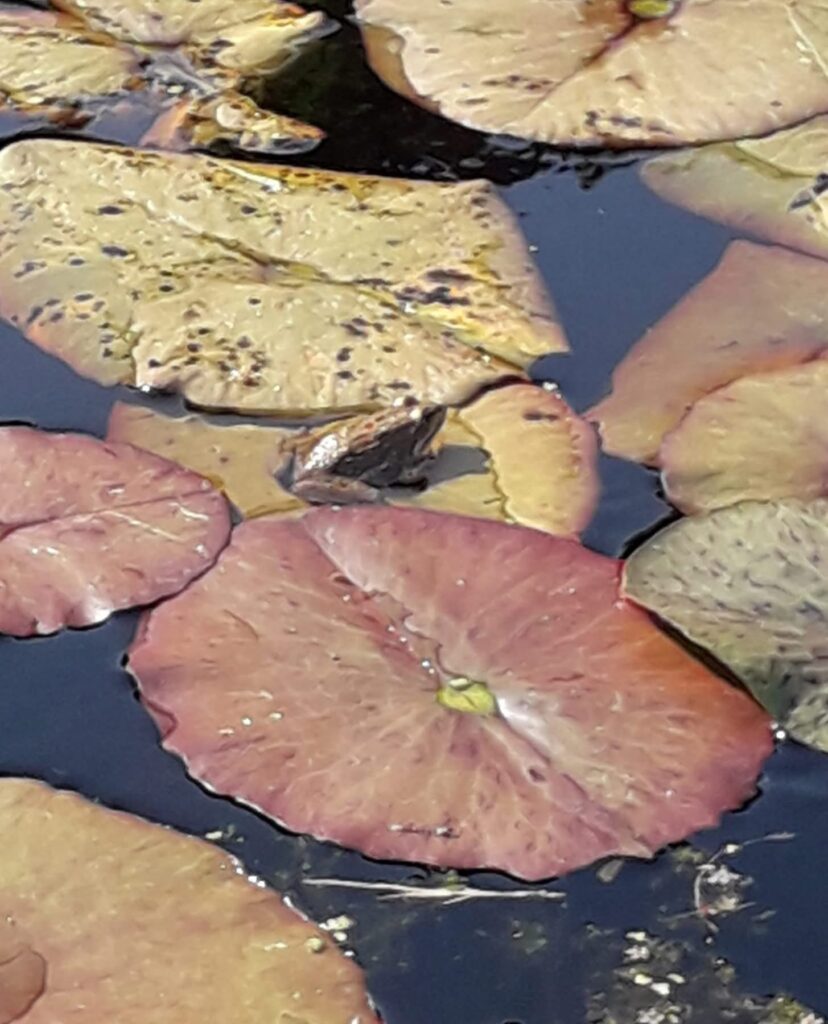
Unlike rivers or streams, where flowing water is usually present, wetlands are generally waterlogged during the winter months, but can be almost dry in summer. Give-away signs of their presrence include flat or slightly depressed areas, standing water, vegetation comprising grasses, reeds and restios, with an absence of trees. There are many wet plots in the Kogelberg. For example, more than 50% of plots in Betty’s Bay are either bordering on, or are in, a wetland.
A few suggestions when building in a Wetland:
Before doing any planning, speak to your neighbours regarding their experiences with the winter rains, water flow etc. A land survey, showing ground elevation contours, is also required prior to Municipal plan submission, which will give a good indication as to the best position for the house and driveway. Municipal Building Regulations include a guideline to limit the footprint of the house so that the garden will include an undisturbed wildlife corridor for animals and plants.
Backfilling with imported gravel, to form a “soil raft” for the house foundations, will alter the natural drainage of a plot. Its positioning and resultant consequences, therefore, need careful consideration for both you and your neighbours. A good alternative would be to elevate the house above ground on wooden stilts or concrete columns. In addition, something that is frequently overlooked is the correct design and placement of the sewage conservancy tank. Many owners have discovered an unwelcome swimming pool where the septic tank should be!
Gardening in a Wetland
Make peace with the fact that you’ll have a pond in part of your garden, one that does not rely on fancy pumps and expensive maintenance. If you keep road verges and storm water channels as natural as possible, and plant indigenous species that thrive in damp ground, your garden will be a natural haven for the local wildlife. It will absorb seasonal rainfall and, the biggest bonus – you will have a beautiful garden without too much effort!
Examples of plants that grow well in wetlands are the endemic grasses, restios and sedges, flowering plants like Arum lily, Agapanthus, some Erica species, and taller plants like Tree Fuchias (Haleria lucida), Fonteinbos (Psorlea pinnata), Cape silver oak (Brachylaena neriifolia), waterwitels (Podylaria calyptrata).
Lastly, and very sadly, proteas, pincushions, cone bushes and most trees hate “wet feet” and won’t survive in waterlogged soils, but you could try them in big pots or raised beds. Happy gardening!
Galia Manicom 082 963 3804.