
In the last newsletter we included an infographic on Biosphere Living, and a question of “do we love the biosphere to death” with our actions?
Here is a “50/50” type question from a resident
Although this style of article is different to those we usually feature in our BBC newsletter, it is an interesting question. Have you noticed anything similar or do you have any “on the ground” ideas, observations or solutions to contribute? I have edited the question and AI answer to shorten it slightly.
 Question:
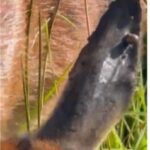
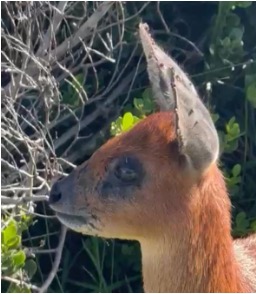
I noticed that our Grysbokkies seem to have more ticks than usual, especially on their ears and face. Is it due to a decrease in certain plants that would normally act as a natural repellent or have the dynamics of the bush changed to such an extent that grysbok find it difficult to rub the ticks off? Alternatively, is there another reason?
AI response:
It is an excellent observation, and you have hit on some very specific environmental triggers. What you are seeing on the Cape Grysbok (Raphicerus melanotis) in the Kogelberg Biosphere, is actually a combination of the natural mechanics of how these small antelope move through the bush, combined with subtle, shifting dynamics in the fynbos ecosystem. The heavy tick burden on the ears and faces of the grysbokkies, and why it seems so much worse lately, is driven by a few key ecological factors:
-
 The Anatomy of “Questing” and Foraging
The primary reason ticks concentrate so heavily on the ears and face of the grysbok comes down to how both the insect and the animal behave:
The “Questing” Height: Ticks climb to the tips of vegetation and wait with their front legs extended—a behaviour called questing. Because grysbok are small, low-slung antelope, their faces and large, sensitive ears are the very first point of contact as they push through the brush to forage.
Self-Grooming Limitations: Antelope use their teeth and hooves to groom themselves. While a grysbok can scratch its body or lick its flanks, it is incredibly difficult for them to effectively remove tiny larval or nymph ticks from the delicate skin around their eyes, muzzle, and inside the folds of their large ears.
- Shifting Bush Dynamics: Ageing Fynbos and Alien Encroachment
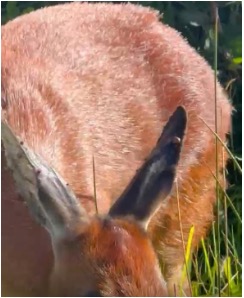 Overgrown Understory: Grysbok prefer relatively thick, “weedy” undergrowth or young fynbos where they can hide. However, if an area of fynbos goes too long without a fire cycle, it becomes tall, woody, and dense. This creates a continuous, enclosed canopy at exactly the height of a grysbok’s head. Instead of lightly brushing past plants, they are constantly forcing their faces through dense, tangled twigs, functioning like a biological broom that sweeps up every questing tick.
Invasive Alien Vegetation: In areas where alien species like Rooikrans (Acacia cyclops) or Port Jackson (Acacia saligna) encroach, the microclimate changes. These aliens create a dense, shaded, and highly humid understorey. Ticks are incredibly sensitive to desiccation (drying out); they thrive and survive much longer in humid, shaded microclimates than they do in open, sun-drenched pristine fynbos.
- The “Natural Repellent” Hypothesis
There isn’t a documented direct decline in a specific plant that acted as a blanket community shield for the grysbok, Many indigenous fynbos plants -most notably Buchu (Agathosma species), Wild Garlic (Tulbaghia violacea), and various aromatic Pelargoniums – contain strong essential oils that naturally deter insects and ticks. When fynbos is healthy and biodiverse, animals brushing past these plants inevitably get coated in minor traces of these aromatic oils. If localised clearing, urban fragmentation, or alien plant displacement reduces the density of these highly aromatic understorey species in the specific pathways the grysbok use, they lose that secondary, incidental layer of protection.
- Climate and Weather: The Real Catalyst
The most likely reason you are noticing a sudden spike lately points toward regional weather patterns over the last couple of seasons:
Warmer Winters and Delayed Frosts: Ticks in South Africa are increasingly active year-round due to higher-than-average pre-winter and winter temperatures. If a winter is mild, the natural die-off or dormancy phase of the tick population doesn’t happen.
Synchronised Spring Hatches: Mild, humid conditions lead to massive, synchronised explosions of tick larvae (often called “pepper ticks”) in the spring and early summer. When thousands hatch at once, the sheer volume on the tips of the vegetation makes heavy infestation inevitable for any passing host.
Nature’s Balance
While it looks alarming and uncomfortable, wild stable populations of Cape Grysbok have evolved alongside indigenous ticks (like the African Blue tick and various Amblyomma species) for millennia. Under normal conditions, healthy adult grysbok tolerate a surprisingly high tick load without suffering severe systemic illness, as their immune systems are well-adapted. However, if the habitat continues to fragment or become heavily overgrown with alien vegetation, the increased parasite pressure can become a stress factor.
Question and AI response submitted by Wayne Jackson
BBC: This answer mentions some of the factors that we observe in Betty’s Bay that impact the habitat of the grysbok: localised clearing, urban development that fragments habitat, alien vegetation, and older fynbos that gets woody and dense.
This is another motivation NOT to strip plots of all vegetation prior to building. Clearing just the footprint of a home for building helps to maintain some wildlife habitat and corridor space. Fencing the entire boundary of your property also limits wildlife movement. If you have pets, please consider fencing just a portion of your property, and leave the rest as natural habitat for wildlife to traverse.
It is important to note any behavioural changes in a grysbok to try to determine if the tick load has become too heavy for it, or if the animal has become infected.