
Last weekend I watched ‘March of the Penguins’ – a 2005 French documentary that portrays the incredible but harsh reality of the regal Emperor Penguin in Antarctica. To view a short trailer, you can use this link: https://www.youtube.com/watch?v=3RSxrusVknE
Having featured the ‘dad’ Emperor Penguin in the May BBC newsletter for Father’s Day, I think “mom” needs just as much credit for Women’s Day.
After seeing the many threats they face individually and as a pair in order to breed successfully each season, it is a miracle that both parents and their chick survive.
They all walk 110 km in convoy, for 20 days and nights, to get to their breeding area. After pairing and mating, they wait in this icy environment for more than two months until mom produces their egg. They have to transfer the egg very carefully to dad’s feet and brood pouch – if it lands on the ice, their breeding journey ends abruptly in a frozen egg.
The exhausted females then leave the males and walk the 110 km back to the ocean over another 20 days and nights, to fish for food to replenish themselves and build stores for feeding their chick. The males remain huddled together to survive through a winter of blizzards, incubating the egg.
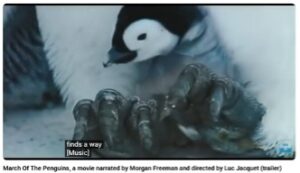 Finally, the females walk the long journey back to the males. Mom has to return in time, well fed, to take over feeding and raising the chick. If not, the chick dies. A now starving and exhausted dad leaves mom in charge to raise their chick and he walks the long journey back to go and feed.
If that isn’t enough, once mom has raised the chick, she leaves to find food, leaving the chicks with some adults, at the mercy of predators, until they are ready to head for the sea. By this time, the short summer has melted the ice near the breeding ground, and the sea is now nearby.
It is a phenomenal and harsh breeding journey!
I thought, being so isolated, that at least they don’t have stress from people!
I was wrong.
A few days later, and 21 years after the documentary was produced, I saw an article on Antarctic tourism, the impact it is having and the guides who are leaving this job due to what they are seeing there. ‘I can’t work in the farce of climate change cruise tourism anymore’: why Antarctic guides quit their dream jobs https://share.google/4EGE3GEQZpzd24XMw
I thought of our African Penguin neighbours and all the threats and people interference they have faced over the last century that decimated their once abundant populations. Currently the colony at Stony Point faces additional threats.
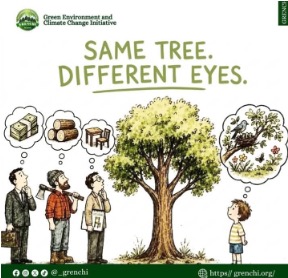 Stepping back from the penguin scenario, what threats does Betty’s Bay face? Is the village at a tipping point of losing its wildlife, flora, habitat, wetland, biodiversity, peacefulness, dark starry nights and uniqueness to “developers”, to become another cemented suburb that some, maybe those who benefit financially, regard as ‘necessary or desired progress’?
Rooiels residents work proactively to maintain the character of their village and co-existence with wildlife.
Can Betty’s Bay residents, in a 13 km long village of such diverse sections and people, achieve the same?
Carol Clark
BBC newsletter is compiled by Carol Clark and proofread by Patrick Bolttler.