
This month, let’s get a bit more technical about alien invasive plants. Remember, that alien plants are not naturally found in this area, but are not necessarily invasive. Invasive plants spread aggressively, are very, very thirsty and lead to the decline or extinction of endemic plants. Endemic plants are ones that grow naturally in specific geographic areas, found nowhere else on earth – here it is fynbos. One more term you need to know is indigenous – plants that are found in South Africa.
Here comes the official stuff – according to the NEMBA (National Environmental Management: Biodiversity Act), the law requires property owners to remove and destroy invasives. They are also required to disclose any NEMBA-listed invasives when selling the property, as this can affect the sale of a property. It is important to note that this does not mean just chopping down all vegetation on the plot, only removing the baddies.
https://invasives.org.za/wp-content/uploads/2022/05/General-Alien-Invasive-Plant-Control.pdf
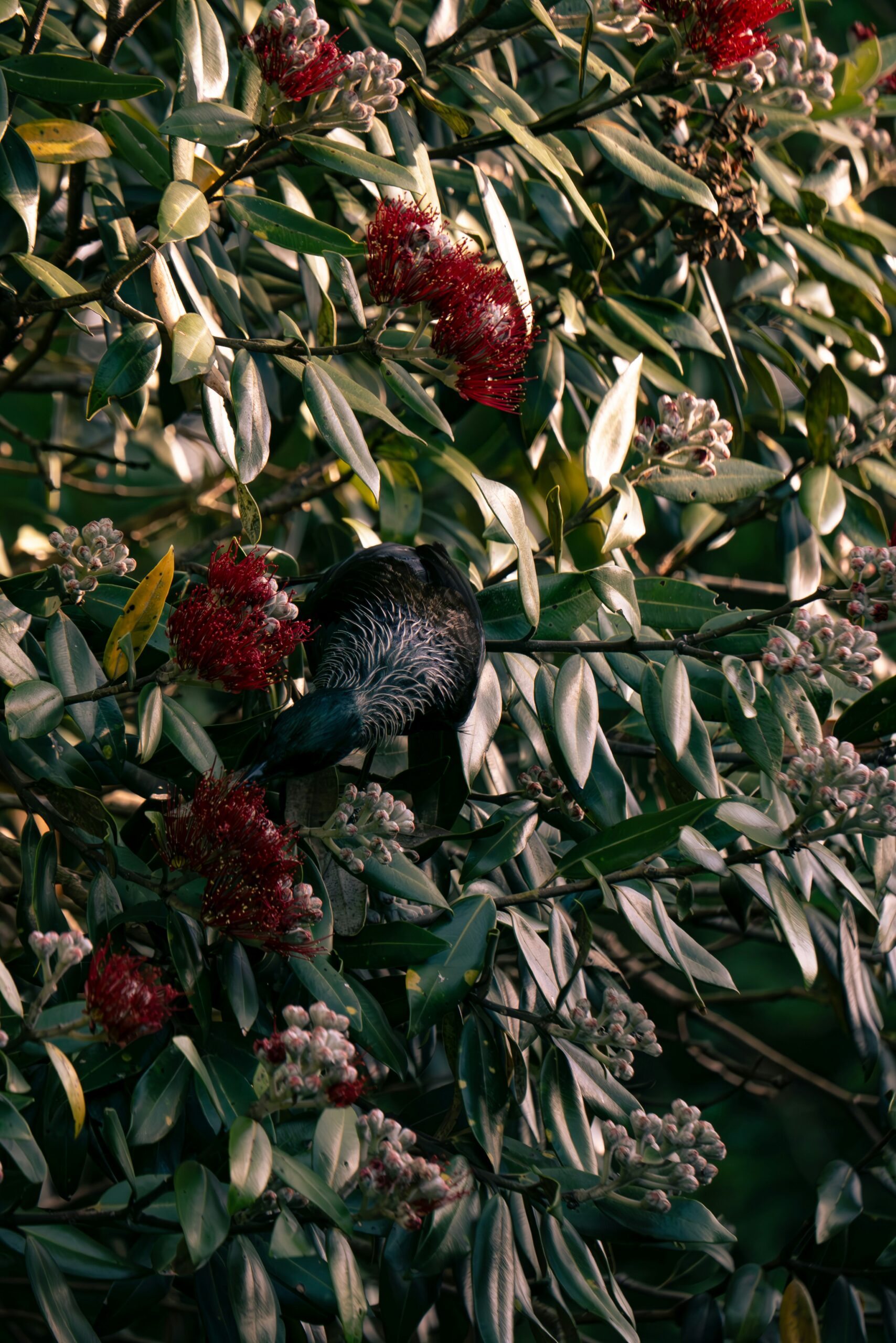
Which trees are baddies? For a comprehensive list, please see the websites below. Some of the bad (and prettiest) culprits in this area include the New Zealand Christmas tree (Metrosideros excelsa), Hakea (Hakea salicifolia), Australian myrtle (Leptospermum laevigatum), Australian Cheesewood (Pittosporum undulatum) and Banksia (Banksia ericifolia). The ‘problem’ with mature invasive trees is that they are showy and provide privacy, so it’s understandably difficult to get rid of them, but grit your teeth and do the fynbos a favour! For pictures of the culprits mentioned see https://bettysbayconservancy.co.za/alien-invasive-species/
Which trees to plant instead? There are the fairly fast growers, and the slow-and-steady growers. A good idea is to plant a fast-grower next to a slow-grower. The fast-growers have shorter life spans (10 – 15 years), but they will act as a natural shield to the slow-growers.
Some examples of faster-growers – Boekenhout (Rapanea melanophloeos), Wild Peach (Kiggelaria africana), Keurboom (Virgilia oroboides), Cape Silver Oak (Brachylaena neriifolia), Rooiels (Cunonia capensis) and of course, all the colourful pincushions (Leucospermum species).
When buying trees, it sounds counter-intuitive, but buy smaller, sturdier plants. Just imagine plants from the nursery as coming from intensive care. Then we shove them into the street, without even giving the poor creatures a ‘step-down’ facility! Trees will have a better chance of surviving when they grow up with the harsh, local weather conditions, which include drying, summer winds from the Antarctic, gale-force winds in winter and poor, acidic soils.
Lastly, once trees are planted, remember the ‘step-down facility’? They need protection and nurturing, so next month, we will cover mulching (good), composting (bad) and water (the ugly, because of scarcity and cost)! Watch this space and happy gardening till then.
Galia Manikom