
BBC4thSATURDAY: 25 OCTOBER: MOUNTAINS OF WASTE – SEPARATION AT SOURCE: S@S
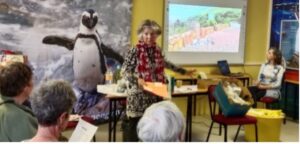
Thanks to Barbara Jenman for all the preparation and items she brought to demonstrate how we can “separate at source” in order to decrease the amount of waste that our households send to the “mountains of waste” at landfill sites.
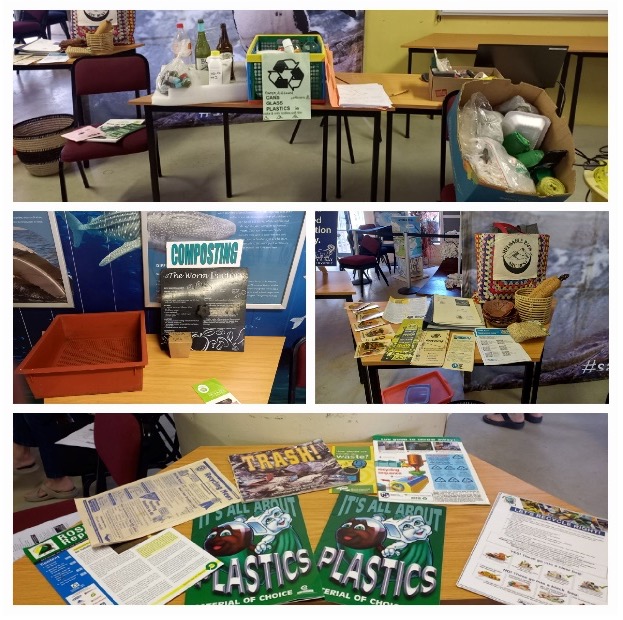
Not all the types of plastic bags that we put in our clear recycling bags are useful to the Hermanus Recovery Facility for gaining income. The unsuitable plastics end up in the landfill e.g. plastic bags with sticky labels on that do not come off easily, cellophane-type plastic bags and chip packets.
Perhaps the shops that sell “self-select” fruit and veg and provide clear plastic bags that they stick price labels on, could review the method they use to price the bags? Alternatively, some shops do sell reusable mesh bags for customers to place their selection in so that they avoid using single-use plastic bags.
There are many simple ideas for using boxes, bags or other containers to separate your recyclables such as glass, tin, plastic and paper from the rest of your household waste, as well as separating your food waste.
Composting, using systems like vermiculture or Bokashi are methods you can use to separate and process your organic food waste.
 Transforming Plastic Waste into Concreate Building Solution: There is a company in Blackheath in Cape Town that uses plastics: The Centre for Regenerative Design & Collaboration Materials South Africa (CRDC MATERIALS SA). Their mission is “to create appreciating value from the world’s plastic waste”.
“Founded by the Centre for Regenerative Design & Collaboration (CRDC) and CRDC MATERIALS, the mission of CRDC MATERIALS South Africa (CRDC MATERIALS SA) is to create appreciating value & impact from un-recyclable, mismanaged plastic waste by converting it into a lightweight Eco-Aggregate called RESIN8™.”
Have a look at their website to see what they do with unrecyclable plastics: https://www.crdc-sa.com/
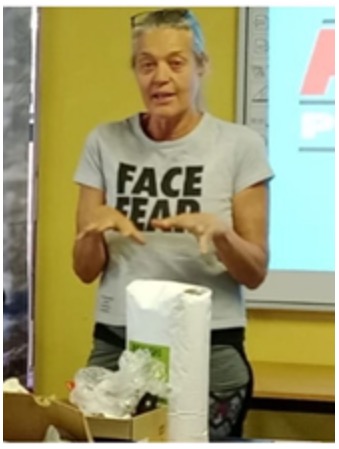 Thanks too to Liezel Smith for demonstrating the Bokashi method to deal with the organic waste from our kitchens. It is a simple means of separating our food waste at source so that it does not go into our weekly black bag of waste that goes to the landfill.
Unsure of what to do with the final contents of your Bokashi bin? Liezel also offers a service whereby she fetches your full Bokashi bin and transports it to Mthimkhulu in Kleinmond. Here they use it for making compost, which they sell to generate funds. After they clean your Bokashi bin, Liezel returns it to you, and it is ready for you to use it again.
There are many simple ways to “separate at source”.
Start small and let this be a daily way of dealing with your household waste and doing your daily “one small act for biodiversity”.
Carol Clark
GREAT SOUTHERN BIOBLITZ: 24 – 27 OCTOBER – OVERSTRAND COMES FIRST AGAIN!
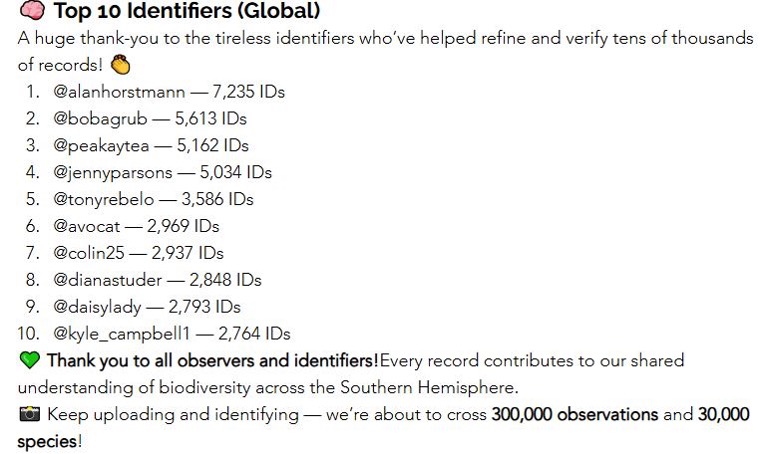
The final results for the Great Southern BioBlitz (GSB) 2025 show an impressive collective effort, with the Overstrand region once again recording the most observations in the Southern Hemisphere (15 016)!
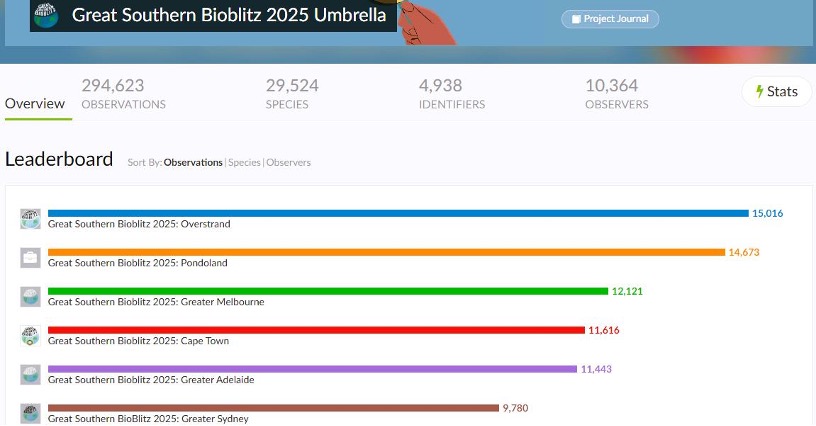
Globally, the GSB 2025, which ran from October 24-27, gathered a massive amount of data on the iNaturalist platform:
- Over 294 000 observations were made.
- Nearly 30 000 species were documented.
- Over 10 000 observers
- almost 5 000 identifiers contributed
Overstrand also achieved second place for the number of species recorded (2 045).
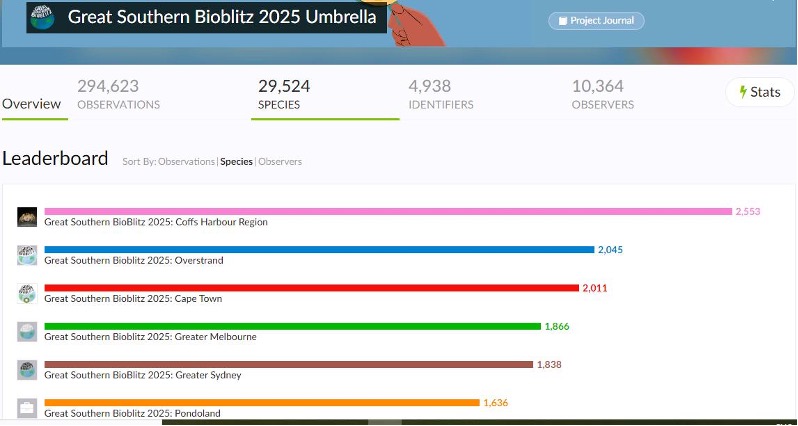
Several South African regions also had outstanding results in the overall GSB 2025.
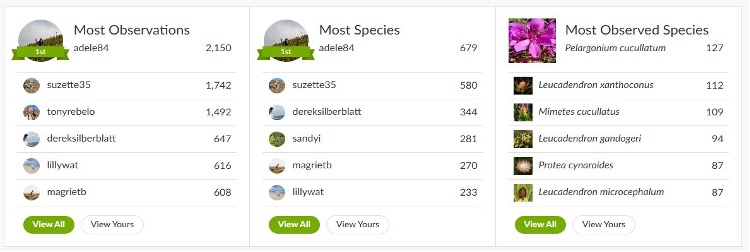
We are all very proud of the results – especially the amazing contribution by Adele Scheepers. Adele is one of the Overstrand Bioblitz facilitators, a member of Kogelberg CREW and a BBC member. She achieved first place in the Overstand for Observations (2 150) as well as for Species (679) over the four days! Great results, Adele! Thank you!
 Special mention must also be made of Jenny Parsons, also an Overstrand Bioblitz facilitator and CREW member, who achieved 4th place in the global results for number of Identifications made (5 034). Well done, Jenny!
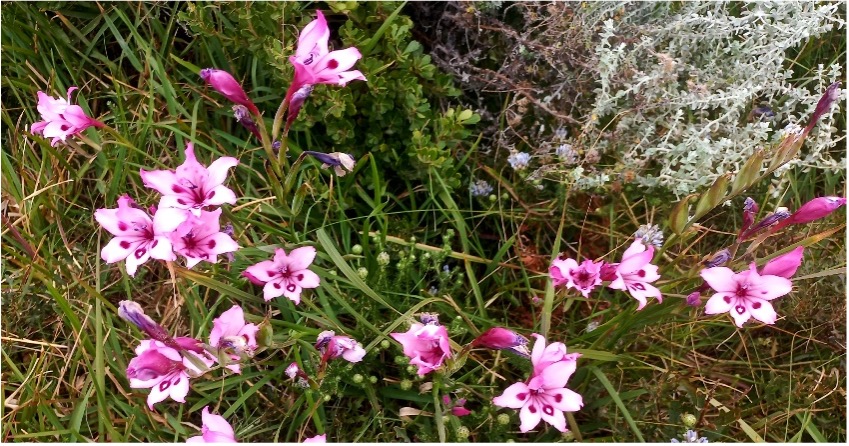
Each record helps scientists understand and protect biodiversity across the Southern Hemisphere. Thank you to everyone who has contributed, from those out in the field taking photos to the dedicated identifiers helping refine our data!
Sandy Immelman
OUR BBC T-SHIRTS
BBC “Every day do one small act for biodiversity” T-Shirts
Many people have asked about our BBC T-shirts. We are now ready to receive orders.
We need 40 or more orders to place a big order on 27 November, including full payment, in order to get the T-Shirts before the company closes for the year.
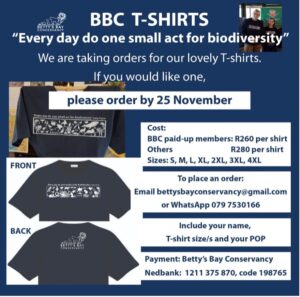
Place your orders, with your POP, as per the advert.
(Editor’s note: By the time you are reading this the 27 November will have passed. Should you still wish to order a t-shirt, please email bettysbayconservancy@gmail.com and you may be able to place an order for next year.)
Whether you buy one as a gift for someone or treat yourself to one, the T-Shirts help to support conservation in Betty’s Bay and encourage people to take care of our biodiversity.
If you are wondering where our slogan came from:
At our first BBC AGM in 2022, Craig Foster recorded a video message for us to play at the AGM. We posted it on our FB page afterwards. We adapted this slogan from his encouragement that everyone can do something each day to help preserve biodiversity in this beautiful village, and that all the small things add up to make a big difference.
If you missed Craig’s message on our FB page in 2022, here is the link: https://www.facebook.com/share/v/1AWhjQWRRr/
THANKS TO OUR PENGUIN-PALS FOR THEIR HELP
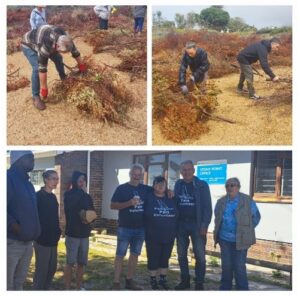 Our Penguin-Pals do more than drive “ambulance trips” to transport sick or injured penguins from Stony Point.
Recently these enthusiastic volunteers have helped at Stony Point in other ways:
- A bundling day to help bundle the piles of hacked rooikrans at the colony
- Supporting Stony Point staff who needed to remove some vulnerable penguin chicks from the colony and transport them to SANCCOB
Thanks to our Penguin-Pals who give of their time to support the African Penguin in so many different ways.
We are currently revising our “Guidelines for Visitors to Stony Point” in conjunction with CapeNature and SANCCOB. We hope these will help to educate visitors to behave in a manner that is least stressful for the penguins.
Currently, visitors try to get as close as possible for selfies and even try to touch the penguins. They climb over the fences and dogs are seen walking off-lead with their owners. All these types of actions increase the stress on the penguins