
ABALONE: COULD A RECLASSIFICATION OF DRIED ABALONE HELP TO REDUCE ILLEGAL TRADE?
Abalone are marine gastropod molluscs or, in simpler terms, large, flat marine snails of the genus
Haliotis. The name perlemoen, as it is known in South Africa, comes from old Dutch ‘paarlemoer’ meaning ‘mother of pearl’ in reference to the inside of the abalone shell.
A case for our South African perlemoen (in its dry form) to be reclassified to CITES Appendix 11 at the current COP 30 meeting in Brazil
CITES is the acronym for The Convention on International Trade in Endangered Species of Wild Fauna and Flora.
Our perlemoen (Haliotis midae) is endemic to South Africa. Its wild population has been severely affected by illegal fishing, driven by well-connected organized crime syndicates. The illegal trade, at 2000-3000 tons/year, is over 50-60 times that of the Total Allowable Catch with an estimated 96 million perlemoen poached in the past ten years. The perlemoen is now categorised as an Endangered species, with a very high risk of extinction in the wild. In the Betty’s Bay Marine Protected Area (MPA) of UNESCO’s Kogelberg Biosphere Reserve, it is estimated that the population is 1% of its former levels.
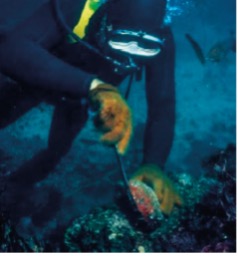 Currently commercial abalone farms and ranches successfully produce over 3000 tons of perlemoen per annum. These stocks are exported live, frozen or canned.
The illegally poached perlemoen are exported in a dried form and it is for this that a CITES Appendix 11 reclassification is being sought. Almost all (90%) of the exported perlemoen goes to Hong Kong Special Administrative Region of China, with 98% of the dried perlemoen being air-freighted there.
The significance of achieving a re-classification for dried perlemoen to CITES 11 is that trade in the product will be subject to permits and documentation, which specify product source. As the Hong Kong authorities strongly enforce these regulations, it is hoped that the re-classification will help to reduce the illegal trade of this threatened species.
The case for re-classification to CITES Appendix 11 of perlemoen in its dried form has been strongly supported by the Minister of Forestry, Fisheries and Environment, Dr Dion George.
Tony Bush and Pete Oxford
BBC: Subsequent to the writing of this article, Dr Dion George was removed from his position as Minister of Forestry, Fisheries and the Environment in November 2025. He was replaced by Willem Aucamp. There are concerns and questions about this action due to Aucamp’s connections and views on aspects of wildlife hunting and trade. Daily Maverick has covered this story with interesting and informative articles.