
In late November, we were graced with a visit from a young male southern elephant seal. He first made his appearance on Silversands main beach. That lasted a day before he went to the Sea Farm Beach. One day there and back to Silversands. The novelty of his visit seemed too much for him and he finally made a decision to try the much less trafficked beach opposite Die Eiland in central Betty’s Bay.
With an area cordoned off and a team of dedicated volunteers, he was assured some relative tranquillity to undergo his annual moult. The moult cycle usually involves a period of fasting for 3-4 weeks as he sheds his old skin and fur before regrowing a new pelage. He changed from a fat, blubbery blonde, through a very scraggy phase as his fur shed in clumps, to an all-black, somewhat leaner individual, until his new hair began to appear.
By day 35, he was visibly thinner having lost most of his reserves from fasting and his neck, pelvis and shoulder blades were clearly visible. His fur had grown back, still relatively dark (particularly on his back) and he left.
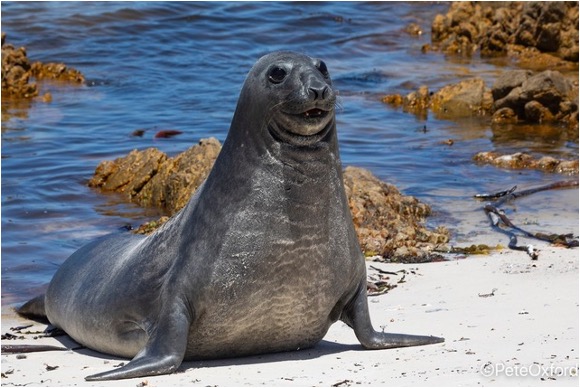
Photo: Pete Oxford
We bade him a fond farewell and hoped we may see him again the following year. We were fooled as he turned up back at Sea Farm for a few days and then on to Pringle Bay. Day 49 was the final report! It was a long stay and far longer than was expected from previous elephant seal visits to the Western Cape.
At approximately three years old Bakkies does not yet have the characteristic elephant seal snout and is only half the length of his full potential which may see him growing to an incredible 4000kg! Let’s hope he makes it.
Currently southern elephant seal colonies in the Sub-Antarctic Islands are being ravaged by bird flu, accounting for a massive number of adult deaths:
Bird Flu Wiped Out Nearly Half of the Females in the World’s Largest Elephant Seal Population, Drone Images Suggest https://share.google/s5DKFpXjHbBHJrJDL

Photo Copyright: Alexa Todd-Mason
Pete Oxford