
New Chicks on Main Beach
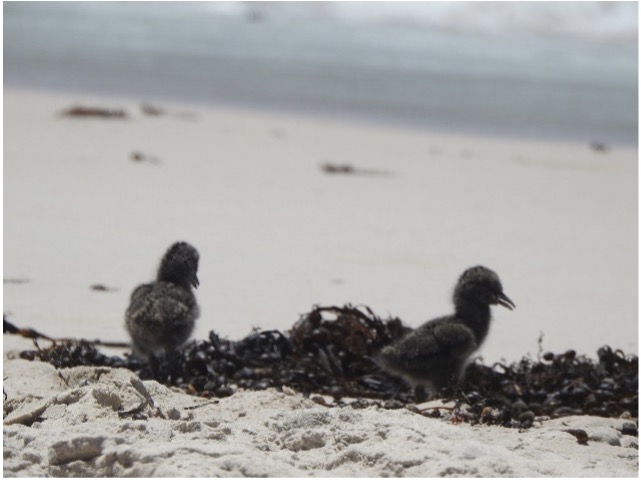
16 December: Exciting news! Our first two African Oystercatcher chicks have hatched on Main beach. The hatchlings are only a few days old. The same pair of Oystercatchers successfully raised one chick to fledgling last season. (The miracle chick on Main beach.)
At this stage they are vulnerable and in danger from kelp gulls, crows and off leash dogs.
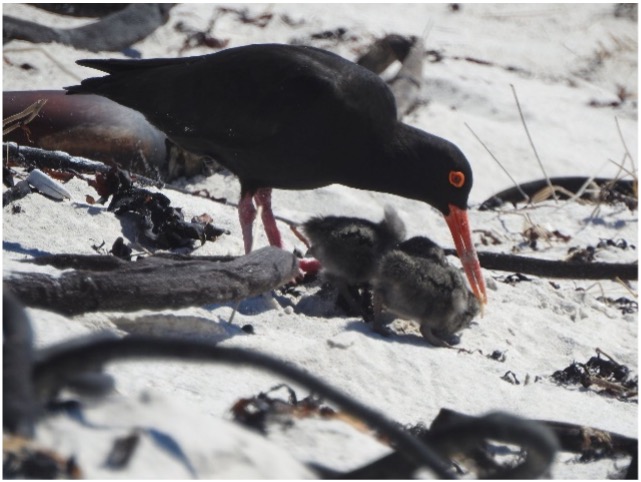
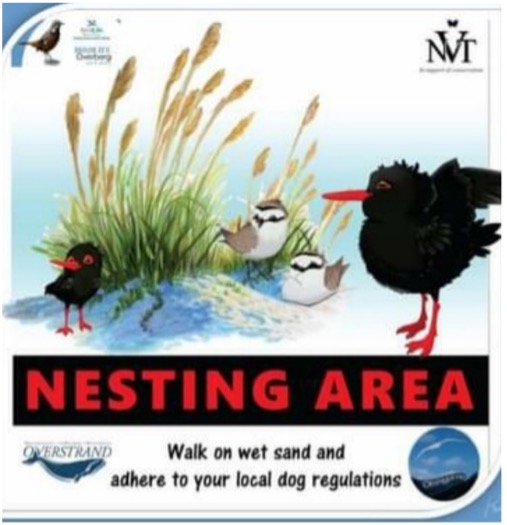
Please keep dogs leashed and keep a fair distance from the birds and their nesting sites, which are marked by signboards and stakes.
Please be aware and listen to the adults “alarm calling”, which increases with intensity when agitated. It is my impression that more people are walking their dogs leashed than seen previously, which we appreciate.
From the pictures, it is clear that kelp plays a vital role in their survival. Chicks hide in the kelp from danger and predation and kelp provides essential foraging.
UPDATE: 30 December:
Despite the many challenges and crowds on our beach, we are happy to report that both chicks are now two weeks old and maturing nicely.
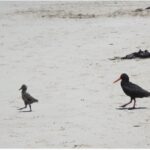
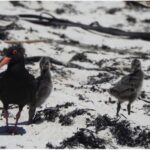
Their appearance differs from the previous photos – their grey mottled feathers are more defined and they have a dark-tipped bill, compare to the bright red-orange of the adult. The eyes are still dark, unlike the bright red eye ring of the adult. Their appearance provides effective camouflage against their environment.
The adults have moved their chicks closer to the rocks as this makes it easier for feeding.
They rely on parents for food for several months while their bills grow stronger to forage for shellfish by themselves. The chicks are very robust now and follow the adults to the water.
They are ground nesting birds, vulnerable to predators and hide in the sand and kelp.
Dogs off leash remain their biggest threat.
Lenore and Duncan Watermeyer, Betty’s Bay Oystercatcher Monitors