
Megan Mayhew Bergman Fri 10 Jul 2026 12.00 BST
https://www.theguardian.com/environment/2026/jul/10/ecological-grief?CMP
As so much of the world is changing and habitat, ecosystems, areas as we knew and loved, and species are transformed and lost – we may not know how to express and deal with the feeling we experience. It’s like a grief that we keep silent.
Though this article is set in America, we know too well the local destruction of habitat and ecosystems in our area and in the Biosphere. Development destroys wetland habitat, indigenous vegetation, wildlife corridors, safe spaces and food sources. Fireflies and other wildlife are lost due to bright outdoor lights, wildlife is hit on our roads, poisons kill vegetation and creatures small and large. Our neighbours, the African Penguin, face potential extinction in less than ten years’ time.
Here are a few quotes from Megan’s article:
“Scientists who spend years studying endangered species inevitably form attachments to them. So do many of us, whether to an endangered tree, a stretch of crumbling coastline, or summer nights once filled with fireflies.”
Yet our culture has almost no language or rituals for this kind of grief.
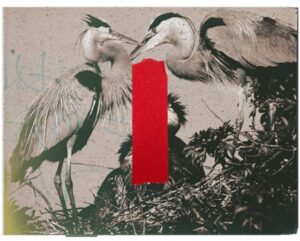 Just outside Manchester, Vermont, there’s a heron rookery I’ve driven past for nearly two decades. Each year, the elegant great blue herons and their nests dotted the skeletal marsh trees. The birds stood guard over their young through sleet and torrential rain, their stoic devotion a marker of Vermont’s tenuous spring.
Then, gradually, there were fewer herons. This spring, there was only one. I passed her on my way to dentist appointments and while driving my children to soccer games. The trees and marsh remain. But the once-visible community of herons does not.
This heron raises her young alone.
No one held a memorial service. There was no public acknowledgement that something beloved or integral to the landscape had diminished. Yet each time I pass the rookery, I feel an ache that does not seem entirely polite to share. It feels like a contradiction at the centre of modern life: we experience profound environmental loss and largely pretend nothing is happening.”
“As a culture, we know what to do when a person dies. We gather, tell stories and hold sacred space. We make room for sadness. But what do we do when a species disappears from a landscape? What do we do when a coastline changes beyond recognition, when a forest is felled for wood pellets and lumber, or when a rookery we love becomes an empty, ghostly landscape of broken trees and still water, with nothing but the sound of the highway to drown out the chorus of the frogs?”
“The word “grief” can feel excessive. Yet what else should we call the feeling that arises when a beloved place, species or ecosystem is altered before our eyes?”
“We know how to mourn grandparents, spouses, friends, and neighbours, but we do not know how to mourn disappearing species, damaged rivers, altered coastlines, democratic institutions, or the healthy futures we expected to inherit.”
“People do not simply need scientific information in an era of such rapid environmental degradation. They also need more formal places to share their feelings: monuments, ceremonies, obituaries, even legislation. Our current practices do not match the magnitude of our losses, and I believe we’ve underestimated how much environmental degradation will continue to affect us emotionally, physically and spiritually.”
In Betty’s Bay and the Biosphere, do we want to sit back and lose the …
- wetlands to infill by tons of builders’ rubble when appropriate building methods avoid this,
- areas drained by pipes as the water is ‘inconvenient’ on erfs,
- biodiversity and habitat to bulldozed erfs,
- porous surfaces to concrete driveways and gardens,
- indigenous vegetation to grassed erfs (green deserts),
- dark skies to light pollution from houses,
- wildlife to roadkill, poisons, dogs and cats,
- wildlife corridors and movements to solid walls and fences all around erfs,
- African Penguins to threats such as predation, loss of their food sources, stress from uninformed visitors.

In 2026, this number has decreased more.
Carol Clark