
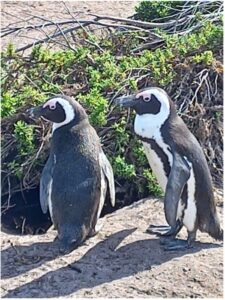
 On Friday, 28 August, CapeNature hosted a community meeting at the Harold Porter National Botanical Garden to discuss the proposed predator‑deterrent fence and the immediate threats facing the critically endangered African Penguin colony at Stony Point.
The meeting drew a large turnout, reflecting how deeply residents care about the penguins and the broader natural environment. Upon arrival, attendees noted a small display of hand‑made signs expressing opposition to the fence, along with a petition for those who wished to sign. This illustrated the strong feelings within the community, but once the meeting began, the atmosphere settled into a constructive and respectful discussion.
CapeNature opened with an important update: Phases 2 and 3 of the proposed fence have been paused, and only Phase 1 — an upgrade to the existing fence line — is currently planned. This announcement helped to ease concerns and allowed the meeting to proceed in a far more positive and orderly manner than previous engagements.
The session was well facilitated by Edith Henn. Pierre de Villiers, Farha Ally, Faroeshka Rodgers, Portia Chake, Cairestine Lottering and Anda Rweqana of CapeNature were present. Edith ensured that community members could ask questions and share their views in a structured way. The CapeNature team provided clear explanations and engaged openly with the audience. Their commitment to the penguins’ protection and their willingness to address difficult questions were evident throughout.
A volunteer sign‑up sheet circulated during the meeting, offering residents the opportunity to become part of the monitoring and education efforts at Stony Point. This practical step was welcomed, as it allows community members to contribute directly to the penguins’ safety and to visitor awareness. BBC Penguin-Pals are also making constructive headway in assisting with the conservation of our penguins and have done so for many years.
Several useful insights emerged from the discussion. Our very own Pete Oxford contributed substantial knowledge on the effects of fencing penguins in. He has written a comprehensive review titled “Penguin Fence Update”, published in the Overstrand Herald and shared on the BBC Facebook page on 4 September. A zoology student noted that international studies have shown predator‑deterrent fencing to be effective for ground‑nesting birds in many contexts, although the Stony Point situation differs from these models. Another key point clarified by CapeNature was that the recent predation appears to be the work of one or two individual caracals, rather than a larger group — a detail that helped correct a common misconception. Suggestions from the floor included tracking or tagging caracals, though CapeNature noted that such measures are prohibitively expensive and that conservation funding remains a significant challenge.
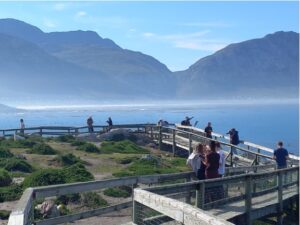 What came through strongly is that Betty’s Bay residents care deeply about the penguins and the preservation of this unique colony. The BBC extends sincere thanks to the CapeNature team for their ongoing efforts, transparency, and dedication. Your work is vital, and we recognise the complexity of the challenges you face.
The Conservancy remains committed to supporting all organisations working to safeguard the African Penguin. We appreciate the continued collaboration and the shared determination to ensure the survival of this very special species.
Patrick Bolttler
Photos: Carol Clark