
Congratulations! Or is that Commiserations? You’ve recently moved to a new house, probably with 1 of 3 types of gardens – a fairly established one (lucky you!); or a lawn all around the house (sterile!); or (the worst!) a new-build with dead bricks and piles of rubble, all covered with hundreds of blobs of cement.
Where to begin? The worst, first!
If the rubble is ‘only skin-deep’, it’s fairly simple to remove it. But not the rocks! They make wonderful features and form natural protection around new plants. If the rubble is meters deep, then be prepared for it to be a long-term project. Building raised beds will give plant roots deeper soil to establish themselves, but will mean importing topsoil, which can be rather expensive. But please, please, use a reputable supplier. This will save you years of weeding (and swearing!).
If you’re substituting fynbos for invasive plants or thirsty lawns, suggest you clear smallish, workable sections at a time, limiting areas of exposed soil, which can be blown over to the next-door neighbour.
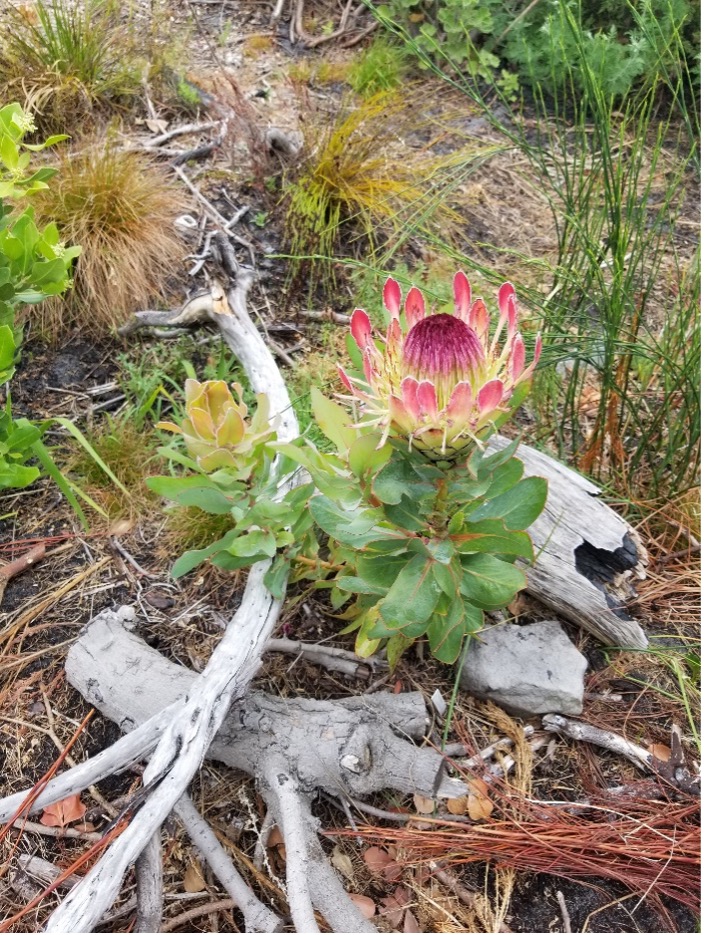
What to plant?
Succession planting is a fancy way of saying firstly, plant indigenous ground-covers everywhere. They will stabilise the soil, stop wind erosion and protect young, slower-growing plants, giving you time to plan the garden. Ground-covers can then gradually be thinned out, while your fynbos shrubs, bulbs, restios, grasses, and yes, even some non-fynbos plants, establish themselves. Examples of fast-growing groundcovers include the many varieties of vygies, gazanias, spur flowers (Plectranthus) and ‘everlastings’ (Helichrysum).
Many of us make the mistake of buying lots of plants and just plonking them all over the garden, because we’re desperate to cover the empty spaces. But there is a method to the madness of fynbos gardening! You really do need to know if your plot is very rocky, in a wetland or a dune (more about this in our next article).