
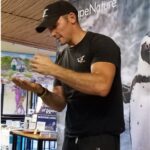
 Mike Amira, the Owl Box Man, gave us a passionate, humorous and informative talk on his work of rescuing owls in different predicaments and building owl boxes, bat boxes and catios.
Mike’s rescuing escapades have involved climbing the heights of chimneys and roofs as well as lying on the ground grinding holes through solid fireplaces to access stuck birds.
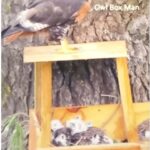
Spotted Eagle owls prefer open spaces and Eagle owl boxes are open and placed in trees.
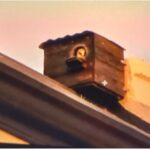
Barn owls like enclosed spaces and create homes in chimneys and parapets. Their boxes are more enclosed and secured against a structure.
Mike has given the BB residents a special discount for groups orders of owl and bat boxes. Please WhatsApp 079 7530166 if you would like to order one.
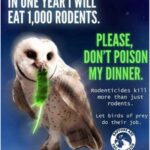
We need owls! They are an important part of the ecosystem and are good at pest control. When we poison rodents in our houses or on our properties, there is a devastating knock-on effect on the owls – they die from secondary poisoning after eating the rodent.
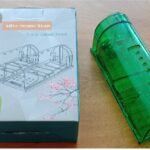
A better option is to use a humane trap to trap and relocate the rodents. The BBC now has some humane traps available for sale. There are two per box and the price is R130. We first want to write our clear instructions for their use before we make them available.
 Owls are also at risk from various “innocent” man-induced factors e.g. helium balloons, balloons from gender reveals and other parties, bread tags, human hair, fish line and toxins like Sluggum.
Catios are one alternative to prevent cats injuring and catching birds and he showed us some of his amazing catio creations.
The breeding season of owls is July/ August. At two weeks old, the owlets look like snowballs and at about five weeks, they are peeking out and looking at the world around them.
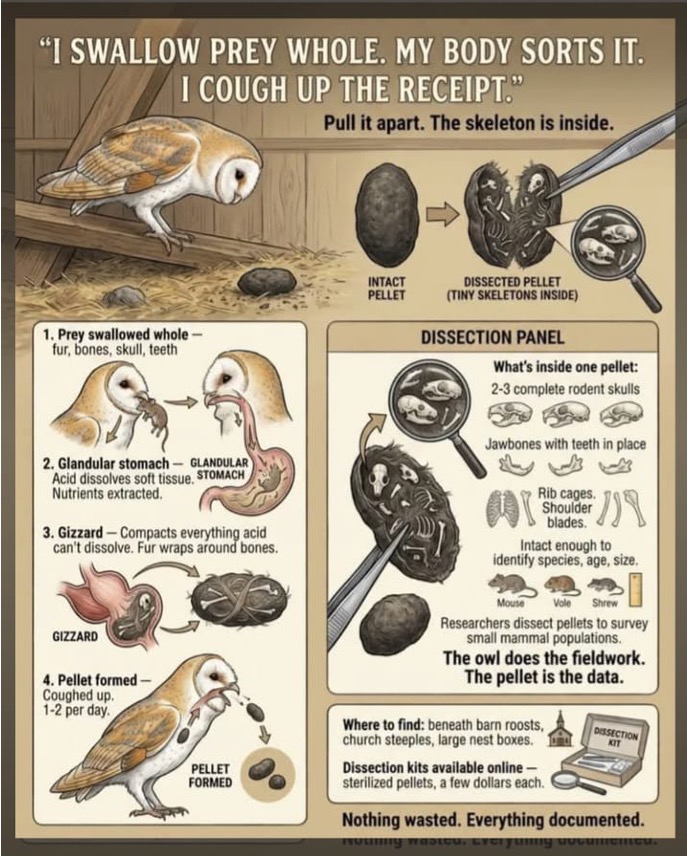
Owls’ poop is white and calcium-rich, so look out for these deposits under trees when you walk around – they are clues that there is an owl above. They regurgitate pellets inside the nests or boxes and these contain evidence of what they eat.
Let us reconsider any use of poisons that may affect these amazing birds and any other animals that could suffer from secondary poisoning.
We are aware the Overstrand Municipality still uses Roundup and we want to address this with them to stop the unnecessary use of poison in the Biosphere. This poison is being banned or restricted in various countries primarily due to glyphosate, the active ingredient, being classified as a “probable human carcinogen”.
Carol Clark